What Other Primate Species Can Be Tracked Near Bisate Lodge?
June 1, 2026
What Specialized Camera Gear Is Recommended for Capturing Wildlife in the Misty Jungles Versus the Open Plains?
June 1, 2026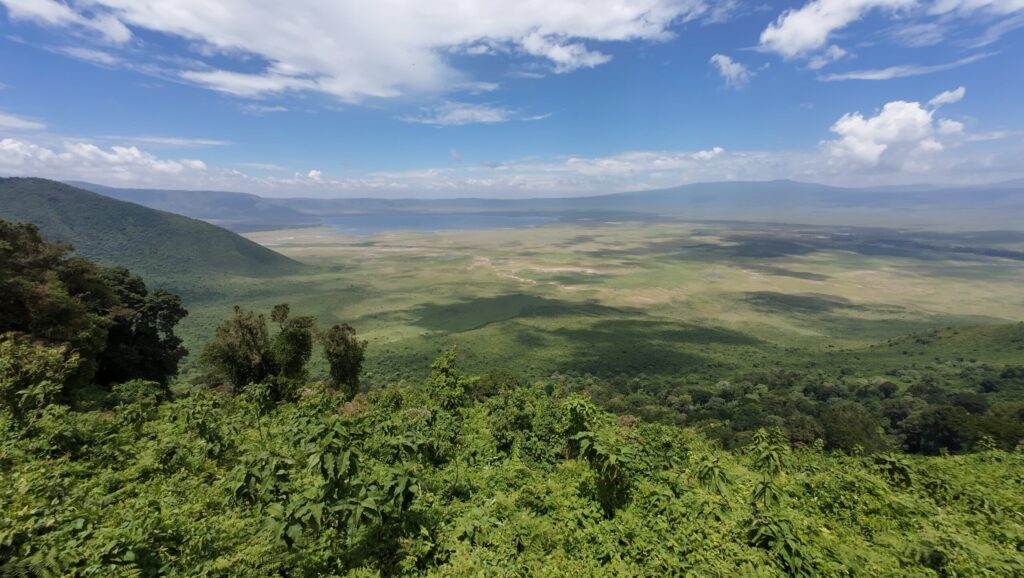
How Does the Terrain of Volcanoes National Park Compare to the Landscape of the Ngorongoro Crater?
When planning an African safari, travelers often find themselves weighing two of the continent’s most iconic yet vastly different geological marvels. A common question that arises for adventurers is: How does the terrain of Volcanoes National Park compare to the landscape of the Ngorongoro Crater? Both destinations offer breathtaking views and world-class wildlife encounters, but their physical environments could not be more distinct. At Firante Gorilla Treks, we believe that understanding these differences is key to choosing the right adventure, whether you are hacking through thick rainforests or cruising across open savannah floors.
The Steep Volcanic Peaks of Rwanda
What Characterizes the Mountainous Environment of Volcanoes National Park?
To understand how does the terrain of Volcanoes National Park compare to the landscape of the Ngorongoro Crater, one must first picture a vertical world of mist and dense vegetation. Volcanoes National Park, located in northwestern Rwanda, is defined by the towering, jagged peaks of the Virunga Massif. The terrain here is dominated by five extinct and dormant volcanoes covered in thick bamboo forests, alpine meadows, and hyper-dense tropical rainforests.
Navigating this area requires physical stamina, as trekkers must climb steep, often muddy slopes ranging from 2,000 to over 4,000 meters above sea level. It is a closed, intimate jungle environment where every step brings you closer to the hidden sanctuaries of mountain gorillas.
The Sun-Drenched Floor of Tanzania’s Caldera
How Vasty Different is the Flat Savanna of the Ngorongoro Crater?
In sharp contrast to Rwanda’s peaks, looking at how does the terrain of Volcanoes National Park compare to the landscape of the Ngorongoro Crater reveals a massive, flat, and enclosed grassland ecosystem. The Ngorongoro Crater is the world’s largest unflooded and unbroken volcanic caldera. Rather than climbing up a mountain, safari-goers descend down steep, 600-meter walls into a bowl-like basin covering roughly 260 square kilometers.
The crater floor is predominantly open savanna, alkaline lakes, and small patches of acacia woodlands. It offers wide-open, sweeping vistas where visibility stretches for miles, making it incredibly easy to spot the “Big Five” from the comfort of a 4×4 safari vehicle.
Comparing the Safari Experience and Trekking Conditions
How Do the Physical Demands and Wildlife Viewing Styles Differ Between Both Landscapes?
When analyzing how does the terrain of Volcanoes National Park compare to the landscape of the Ngorongoro Crater, the direct impact on your safari style becomes very clear. Rwanda offers an active, foot-based adventure where you challenge the rugged mountain slopes, pushing through undergrowth to find primates.
Tanzania, on the other hand, provides a classic, vehicle-bound game-viewing experience across a flat plains ecosystem. While Rwanda tests your legs in a humid, high-altitude jungle, Ngorongoro offers a dusty, breezy drive across a prehistoric volcanic floor packed with massive herds of herbivores and predators.
Immersive Cultural Experiences Around the Safari Lodges
What Unique Cultural Encounters Can You Enjoy Outside the Parks?
Beyond examining how does the terrain of Volcanoes National Park compare to the landscape of the Ngorongoro Crater, the human elements and communities surrounding these regions add immense value to your journey. When booking through Firante Gorilla Treks, your itinerary bridges the gap between wild nature and ancient human traditions.
- Around Volcanoes National Park (Rwanda): Outside the mountain lodges, you can visit the Gorilla Guardians Cultural Village (Iby’Iwacu) to learn about traditional Rwandan medicine, enjoy vibrant Intore drumming and dance, and try your hand at archery. Guests can also participate in local community reforestation projects, planting indigenous trees to help restore the boundaries of the park.
- Around the Ngorongoro Crater (Tanzania): The highlands surrounding the crater are the ancestral lands of the Maasai people. Visiting a traditional Maasai boma (village) allows travelers to witness the famous jumping dance (Adumu), learn about pastoral lifestyles, and see how indigenous communities coexist alongside Africa’s apex predators.
Evaluating how does the terrain of Volcanoes National Park compare to the landscape of the Ngorongoro Crater ultimately shows that these destinations complement one another perfectly. One offers a mystical, vertical jungle climb, while the other provides a vast, open theater of wildlife wildlife.
Book Your Next Journey: Whether you want to conquer the volcanic slopes of Rwanda or gaze across the floor of Tanzania’s ancient caldera, Firante Gorilla Treks is here to craft your perfect, seamless African safari.
