
Unlocking Private Access to the Heart of the Serengeti Ecosystem
May 26, 2026
The Legal Distance Regulations for Gorilla Trekking in Volcanoes National Park
May 26, 2026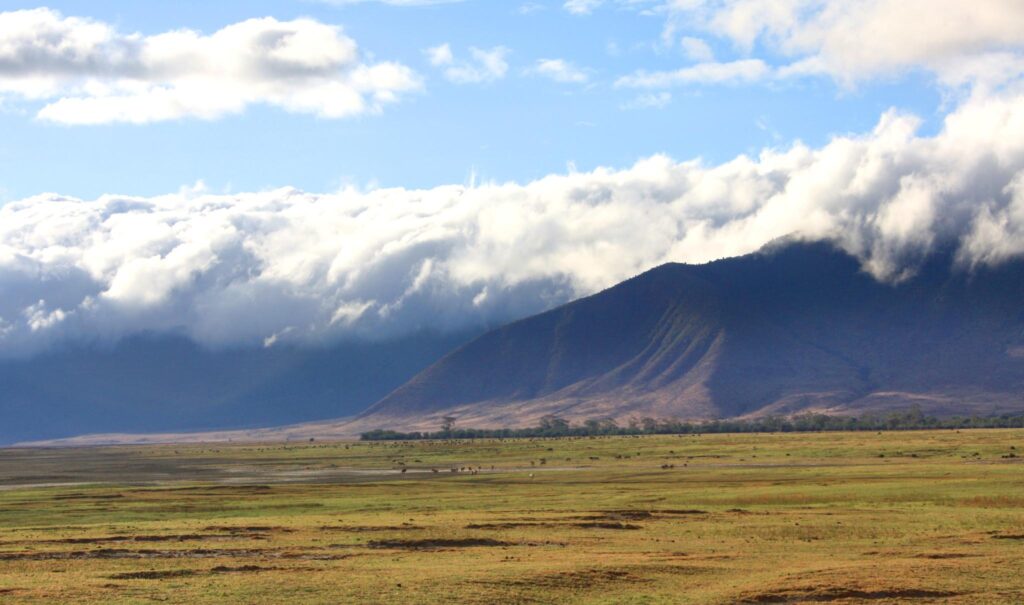
Evaluating Your Success Rate for a “Full House” on the Caldera Floor
For wildlife enthusiasts, completing the ultimate safari checklist is a lifelong dream. The volcanic floor of the Ngorongoro Crater in Tanzania is globally celebrated as one of the few natural sanctuaries where this feat is highly achievable.
To help you plan your East African safari, Firante Gorilla Treks has put together an expert assessment of your realistic chances of encountering the complete “Big Five” (lion, leopard, elephant, buffalo, and rhinoceros) within this majestic natural wonder.
What Are the Actual Chances of Encountering the “Big Five” on the Floor of the Ngorongoro Crater?
Statistically, your chances of seeing all members of the Big Five on the Ngorongoro Crater floor are among the highest in Africa, frequently exceeding 80% to 90% over a two-day itinerary.
Because the crater is a 260-square-kilometer collapsed volcanic caldera with steep, 600-meter-high walls, it functions as a natural enclosure. This unique geography concentrates over 25,000 large mammals in a relatively compact space, meaning wildlife density is extraordinarily high and animals do not migrate away. While a “Full House” (spotting all five in a single day) is entirely possible, your success rate depends heavily on tracking the two most elusive species: the black rhino and the leopard.
Which Species of the Big Five Are Easily Encountered?
Three of the five iconic species are virtually guaranteed on any standard game drive across the open grasslands:
- The Pride of Lions: The crater floor hosts one of the densest populations of lions in Africa. Because they have been exposed to safari vehicles for generations, they are remarkably relaxed and can frequently be seen hunting, playing, or resting in the shade right alongside the tracks.
- The Cape Buffalo: Thousands of buffalo roam the caldera floor in massive, tightly-knit herds. You will also frequently encounter solitary, older males—affectionately known as “dagga boys”—wallowing peacefully in the mud near the marshlands.
- The Giant Elephant Bulls: The crater floor is famous for its resident population of massive, elderly elephant bulls boasting some of the largest tusks left on the continent. They are easily spotted moving through the swamps and forests.
Which Species Present the Biggest Challenge for Sightings?
To cross off the remaining two animals, you will need a combination of patience, a sharp-eyed guide, and high-quality binoculars:
- The Critically Endangered Black Rhino: The Ngorongoro Crater is the absolute best place in Tanzania to see the rare black rhino. Around 30 to 50 individuals live permanently on the plains. While they are highly visible in the cool early morning hours near the Lerai Forest, they often retreat into the distant scrub as the afternoon heat rises.
- The Elusive Leopard: The leopard is the true wildcard of the crater. Being naturally shy, solitary, and excellently camouflaged, they rarely venture into the open savannah. Your guide will focus heavily on scanning the branches of the yellow-barked acacia trees along the edges of the Lerai Forest or the dense vegetation lining the steep crater walls.
Pro Tip from Firante Gorilla Treks: To maximize your hit rate, enter the crater gate exactly when it opens at 6:00 AM. The morning light provides peak visibility, and both rhinos and leopards are significantly more active before the sun gets too hot.
What Rich Cultural Experiences Can You Enjoy Around the Ngorongoro Safari Lodges?
A journey to this spectacular region is incomplete without exploring the heritage of the people who live in harmony with the wilderness. The highlands surrounding the crater rim offer profound opportunities for authentic cultural interaction:
Educational Visits to an Authentic Maasai Boma
The Ngorongoro Conservation Area is a unique UNESCO World Heritage Site where pastoralist communities coexist with wildlife. Guests can arrange a respectful visit to a traditional Maasai village (Boma). Here, you can watch the famous Adumu jumping dance, learn about the architectural structure of their mud-and-thatch homes, and understand how the community manages livestock amidst apex predators.
Interactive Traditional Beadwork Workshops
Within the local communities, beadwork is a highly complex visual language used by Maasai women to signify status, age, and marital identity. You can participate in intimate workshops led by village artisans, learning the patience and precision required to craft these vibrant, geometric patterns while directly supporting women’s micro-enterprises.
Guided Ethnobotanical Nature Walks
Before descending into the crater, explore the lush forest trails along the caldera rim with a local guide or Maasai warrior. These walks focus heavily on traditional medicine, demonstrating how various native plants, roots, and tree barks are harvested to cure ailments, repel insects, or provide sustenance in the bush.
Cultural Exchanges with the Hadzabe and Datoga Tribes
For travelers taking a short excursion toward nearby Lake Eyasi, encounters with the ancient Hadzabe and Datoga people offer a glimpse into humanity’s oldest traditions. The Hadzabe are one of the last remaining hunter-gatherer tribes in Africa, speaking a unique click language, while the neighboring Datoga are skilled blacksmiths who still forge iron tools and arrowheads using ancestral techniques.
Craft Your Unforgettable Journey with Firante Gorilla Treks
At Firante Gorilla Treks, we specialize in designing luxury, tailor-made itineraries that seamlessly connect the primate havens of Rwanda with the epic savannah plains of Tanzania. Our professional guides possess the deep tracking expertise necessary to turn your dream of seeing the Big Five into reality.
