Respectful Cultural Safaris 2026: Samburu and Batwa Experiences
June 29, 2026
Discover Uganda’s Rich Cultural Heritage and Traditions
July 13, 2026
The Ultimate Guide to Visiting Uganda for First-Time Travelers
Everything you need to know before you land in the Pearl of Africa
There is a particular kind of nervousness that comes with planning your first trip to Uganda. You have seen the photographs: mist curling over impossibly green hills, a mountain gorilla’s eyes meeting yours through the undergrowth, fishermen paddling out onto Lake Victoria as the sun comes up. But photographs do not tell you which visa to apply for, whether the water is safe to drink, or how you are supposed to get from Entebbe Airport to a forest lodge eight hours away. That gap between the dream and the logistics is exactly where most first-time travelers get stuck, and it is exactly what this guide is for.
Uganda rewards travelers who arrive prepared. It is not a difficult country to visit, but it is a country that asks you to do a little homework first, on everything from currency to road conditions to which months put you closest to a gorilla family. Below, we walk through the essentials, country by country, step by step, the same way a good local guide would talk you through it over a cup of Ugandan coffee the night before you set off.
Why Visit Uganda?
Winston Churchill called Uganda the “Pearl of Africa,” and more than a century later the name still fits. This is one of only three countries on Earth where you can trek mountain gorillas in the wild, alongside Rwanda and the Democratic Republic of Congo, and Uganda’s Bwindi Impenetrable Forest is home to roughly half of the world’s remaining mountain gorilla population. Beyond the gorillas, Uganda is astonishingly compact for how much it offers: savannah game drives in Queen Elizabeth and Murchison Falls National Parks, chimpanzee tracking in Kibale Forest, the thunder of the Nile crashing through a narrow gorge at Murchison Falls itself, and boat rides on lakes ringed by hippos and fish eagles.
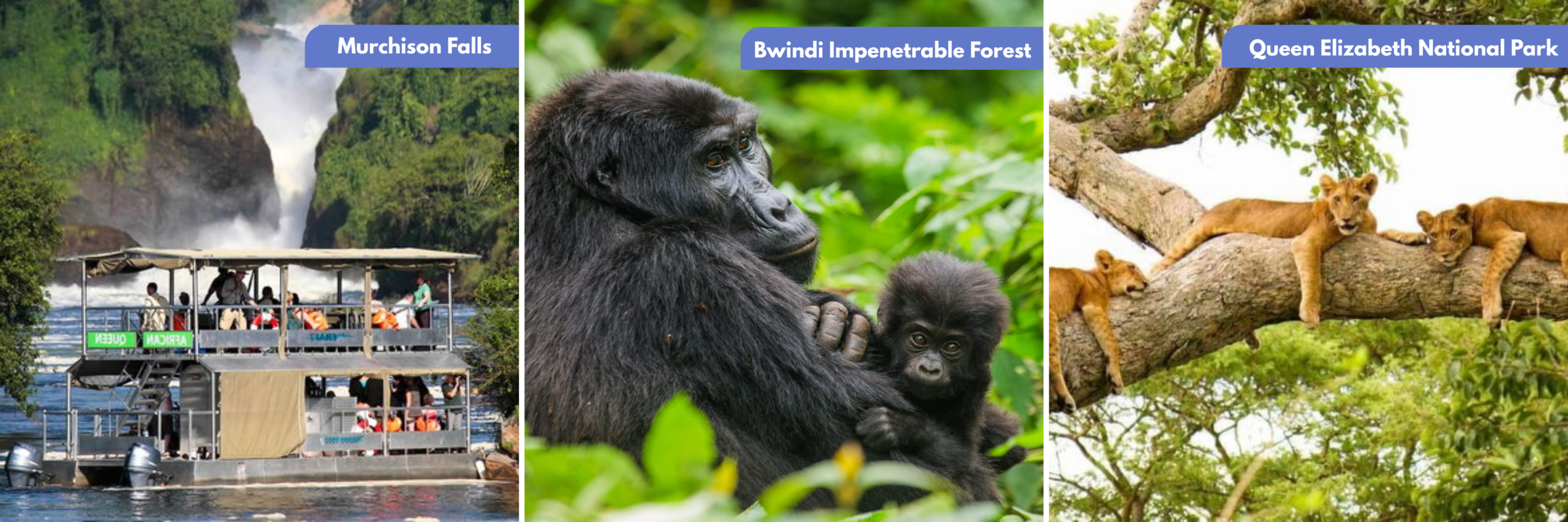
Experience the ultimate diversity of Uganda’s ecosystems, featuring spectacular boat cruises at Murchison Falls, intimate gorilla encounters in Bwindi, and tree-climbing lions resting in Queen Elizabeth National Park.
It also helps that Uganda is friendlier on the wallet than some of its East African neighbors, while still delivering world-class wildlife encounters. Tour specialists such as
Tour specialists such as Firante Gorilla Treks, a Uganda-based safari company, build itineraries that combine gorilla trekking in Bwindi with game drives, chimpanzee tracking, and cultural visits, often pairing Uganda with neighboring Rwanda or Kenya for travelers who want to cover more ground in one trip. Their packages are a useful benchmark for what a well-planned Uganda itinerary should include.
Entry Requirements and Visas
Almost every visitor to Uganda needs a visa, and the country has moved entirely to an online system, so you will not be queuing at an embassy. Applications go through the official government portal, and travelers are advised to apply at least two weeks before departure.
- Single-Entry Tourist Visa: around USD 50, valid for use within 90 days of approval, and good for a single stay of up to 90 days.
- East Africa Tourist Visa: around USD 100, and arguably the smartest option for first-timers. It covers Uganda, Rwanda, and Kenya on one multiple-entry visa valid for 90 days, which is ideal if your trip also includes gorilla trekking in Rwanda or a Masai Mara safari in Kenya.
- Transit Visa: for travelers passing through Entebbe en route elsewhere and not staying in the transit area.
You will need a passport valid for at least six months beyond your arrival date, a passport photo, and proof of a yellow fever vaccination if you are arriving from a country where yellow fever is present, since Uganda checks certificates on arrival. Apply only through the official portal,
Apply only through the official portal at visas.immigration.go.ug; unofficial third-party sites have a habit of charging extra fees for the same service.
Best Time to Visit
Uganda sits on the equator, so temperatures stay fairly steady year-round and the bigger question is rainfall, not heat. The two dry seasons, roughly December to February and June to September, are the most popular times to visit because trails into the gorilla forests are firmer and game drive roads are easier to navigate. June through September also lines up with the high season for gorilla permits, so book your trekking slot well in advance if you are aiming for those months.
Travelers who do not mind the occasional shower are often rewarded for visiting in the so-called “green seasons” of March to May and October to November: fewer tourists, lush scenery, lower lodge rates, and newborn wildlife in many parks. Rain in Uganda tends to arrive in short, dramatic bursts rather than settling in for the whole day, so it rarely derails an itinerary.
Currency and Local Transport
Uganda’s currency is the Ugandan Shilling (UGX), and while major hotels and tour operators often quote prices in US dollars, day-to-day spending, market stalls, local restaurants, and boda-boda rides, runs on shillings. It is worth carrying small UGX notes for tipping and casual purchases. US dollars printed after 2009 in clean condition are widely accepted for larger payments such as gorilla permits and hotel bills, and ATMs are reasonably easy to find in Kampala, Entebbe, and larger towns, though far less so in remote park areas.
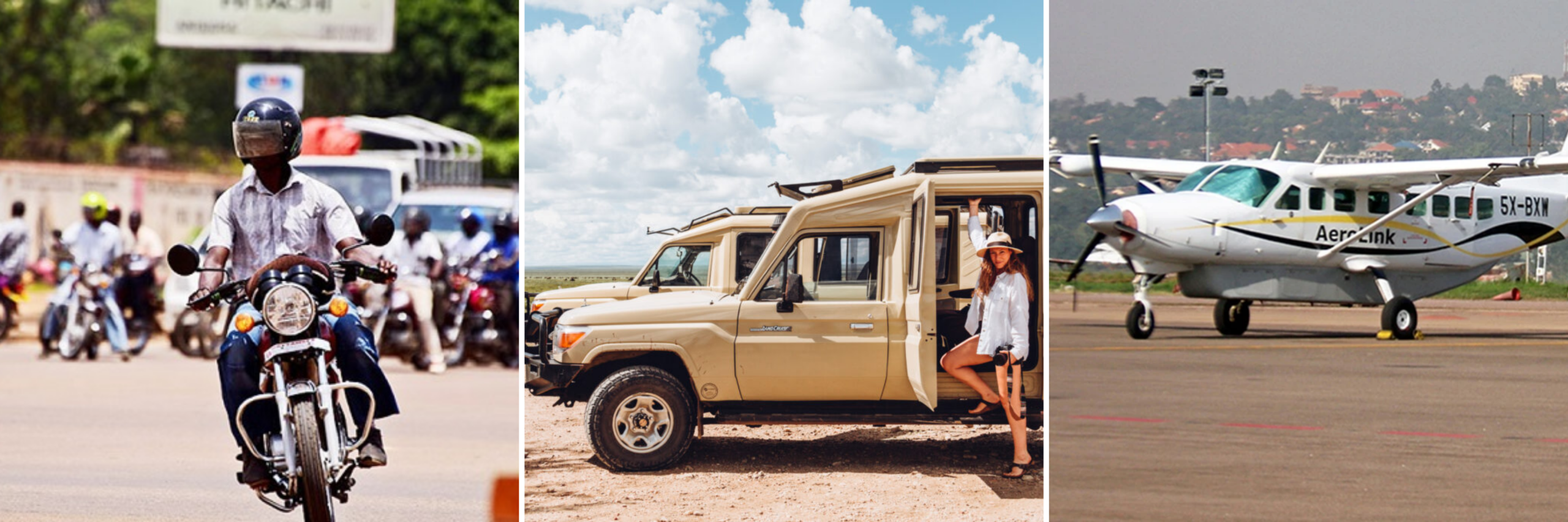
- Boda-bodas (motorcycle taxis): fast and cheap for short hops in towns, but agree on the price first and always ask for a helmet.
- Private safari vehicles with a driver-guide: the standard and safest way to travel between parks; most safari operators, Firante Gorilla Treks included, include a 4×4 and driver-guide in their package pricing.
- Domestic flights: small charter planes connect Entebbe to airstrips near Bwindi, Murchison Falls, and Queen Elizabeth National Park, cutting a seven-hour drive down to about an hour, useful if your trip is short.
- Public buses and matatus (shared minivans): inexpensive and used by locals, but not generally recommended for first-time visitors juggling luggage and a tight schedule.
Where to Stay
Uganda’s accommodation scene runs the full range, from budget guesthouses in Kampala to award-winning luxury lodges perched on the edge of the Bwindi forest. In Entebbe and Kampala, mid-range hotels near the airport are a sensible first and last stop, useful for an early gorilla-trekking departure or a late international flight. Inside the national parks, lodges and tented camps tend to book up months ahead during the dry season, particularly anything close to the gorilla trekking trailheads, so reserving early matters more than shopping around for the cheapest rate.
If planning each leg of accommodation feels overwhelming, this is precisely the kind of work a specialist safari company can take off your plate. Firante Gorilla Treks, for instance, curates lodge and camp selections to match each itinerary, handling logistics like park permits and transfers between properties so first-time visitors are not left coordinating five separate bookings on their own. You can browse their range of packages on the
Firante Gorilla Treks holidays page to get a feel for typical lodge tiers and pricing.
Safety Tips
Uganda is, on the whole, a safe and welcoming destination for tourists, and violent crime against visitors is rare, especially within organized tour settings. That said, a few sensible habits go a long way:
- Travel with a licensed tour operator or registered driver-guide, particularly outside Kampala, where road conditions and wildlife crossings require local experience.
- Keep valuables out of sight in cities, and use hotel safes rather than carrying your passport and all your cash at once.
- Drink bottled or properly filtered water, and consider antimalarial medication after speaking with a travel health provider, since malaria risk exists across most of the country.
- Dress modestly in towns and rural areas out of respect for local custom, and ask permission before photographing people.
- Follow your ranger’s instructions to the letter during gorilla and chimpanzee treks; these are wild animals, and the guidelines, keeping your distance, lowering your voice, are there for both your safety and theirs.
A Suggested 7-Day Uganda Itinerary
For first-timers, a week is enough to experience Uganda’s signature highlight, gorilla trekking, alongside a proper savannah safari, without rushing. Here is a route modeled closely on the kind of itinerary offered by operators such as Firante Gorilla Treks:
- Day 1 – Entebbe/Kampala: Arrive at Entebbe International Airport, settle into a nearby hotel, and if time allows, take a relaxed boat ride on Lake Victoria.
- Day 2 – Travel to Queen Elizabeth National Park: Drive or fly southwest, stopping at the Equator crossing for the obligatory photo.
- Day 3 – Queen Elizabeth National Park: Morning game drive through the Kasenyi plains, followed by an afternoon boat cruise on the Kazinga Channel, one of the best places in Africa to see hippos, elephants, and buffalo from the water.
- Day 4 – Travel to Bwindi Impenetrable Forest: A scenic drive through the Rwenzori foothills and tea plantations toward gorilla country.
- Day 5 – Gorilla Trekking in Bwindi: The centerpiece of the trip. Trekking can take anywhere from one to several hours depending on where the gorilla family is that morning, followed by one hour with the gorillas themselves.
- Day 6 – Lake Bunyonyi: A short transfer to this beautiful crater lake for a slower day of canoeing, birdwatching, or simply resting after the trek.
- Day 7 – Departure: Return to Entebbe for your flight home, or extend the trip with an add-on to Rwanda using the East Africa Tourist Visa.
This same structure, gorillas paired with a savannah park, appears in several of Firante Gorilla Treks’ own packages, including their
7 Days Uganda Primates & Game Drives tour, which is worth a look if you would rather have the logistics handled for you.
Final Thoughts
Uganda has a way of staying with people long after the trip ends, not just because of the gorillas, though they certainly help, but because of how unhurried and genuine the country feels compared to busier safari destinations. Get your visa sorted early, pack for both sun and sudden rain, choose your season with gorilla permits in mind, and lean on local expertise where you can. Whether you plan every detail yourself or work with a specialist operator like
Firante Gorilla Treks to put it all together, your first trip to Uganda is likely to be the one that sends you back for a second.